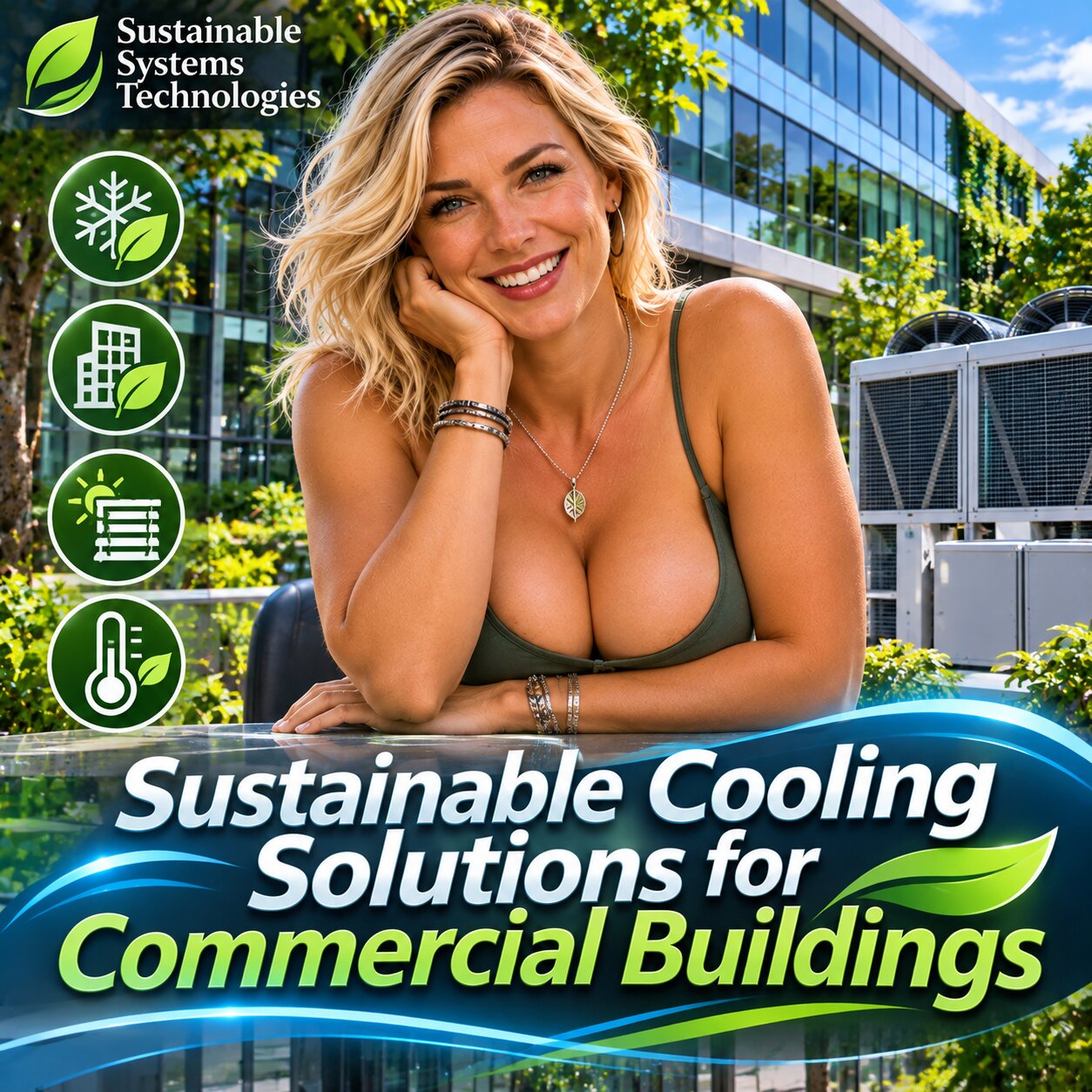
Commercial buildings require effective cooling systems to maintain comfortable indoor conditions, protect equipment and support occupant productivity. However, conventional air conditioning can contribute significantly to electricity consumption, particularly in regions experiencing prolonged periods of high temperatures.
Sustainable cooling solutions aim to reduce this energy demand while maintaining appropriate indoor environmental conditions. By combining passive design, efficient mechanical systems and intelligent building controls, property owners can improve cooling performance without relying exclusively on energy-intensive equipment.
Why Sustainable Cooling Matters
Cooling demand is influenced by building orientation, insulation, glazing, occupancy and local climate. Buildings with poorly controlled solar heat gain or inefficient ventilation may require considerable energy to maintain acceptable temperatures.
This demand can increase operational costs and place additional pressure on electricity infrastructure during peak periods. Sustainable cooling strategies seek to reduce unnecessary heat gains before mechanical cooling becomes necessary.
The most effective approach generally considers the entire building rather than treating air conditioning as an isolated system.
Passive Cooling Through Building Design
Passive cooling uses architectural and environmental strategies to limit indoor heat accumulation. Appropriate building orientation, external shading and carefully designed ventilation openings can reduce exposure to unwanted solar radiation.
Roof insulation and reflective roofing materials may also reduce heat transfer into occupied spaces. High-performance glazing can help control solar heat gain while allowing useful natural daylight to enter.
These measures are particularly valuable when incorporated during the initial design phase, although some can also be introduced through building retrofits.
Natural Ventilation Strategies
Natural ventilation uses pressure differences and air movement to exchange indoor and outdoor air without depending entirely on mechanical fans. Cross-ventilation, operable windows and strategically positioned openings can support cooling when outdoor conditions are suitable.
Stack ventilation uses the tendency of warmer air to rise, allowing it to escape through higher openings while cooler air enters below. Atriums and ventilation shafts may be designed to encourage this movement.
However, natural ventilation is not appropriate under every condition. Outdoor air quality, humidity, noise, security and temperature must be considered before adopting this approach.
High-Efficiency HVAC Systems
Modern heating, ventilation and air conditioning systems can provide substantial efficiency improvements when correctly selected and maintained. Variable-speed compressors, efficient chillers and electronically controlled fans allow equipment output to respond more closely to actual cooling demand.
Variable refrigerant flow systems can offer flexible temperature control across different building zones. High-efficiency chilled-water systems may be appropriate for larger commercial properties with significant cooling requirements.
System selection should be based on detailed load calculations, operating patterns and lifecycle costs rather than equipment efficiency ratings alone.
Evaporative Cooling Technologies
Evaporative cooling reduces air temperature through the evaporation of water. Direct evaporative cooling introduces moisture into the supply air, while indirect systems can transfer cooling benefits without adding that moisture directly to occupied spaces.
These technologies may provide energy savings in hot, dry climates where evaporation is effective. Their suitability decreases in humid conditions, where the air has less capacity to absorb additional moisture.
Water consumption, treatment requirements and hygiene controls must also be considered when assessing the overall sustainability of evaporative systems.
Smart Building Controls and Automation
Building management systems can coordinate cooling equipment, ventilation and occupancy schedules to improve operational efficiency. Sensors monitor parameters such as temperature, humidity, carbon dioxide concentrations and room occupancy.
Automated controls can adjust cooling output when spaces are unoccupied or when environmental conditions change. Advanced systems may also use weather forecasts and historical operating data to anticipate cooling demand.
However, automation only delivers reliable benefits when sensors are calibrated, control sequences are appropriate and system performance is regularly reviewed.
Thermal Energy Storage
Thermal energy storage allows buildings to produce or store cooling capacity during selected periods and use it later when demand increases. Chilled-water tanks and ice-storage systems are examples of technologies used for this purpose.
These systems can shift electricity consumption away from expensive or heavily loaded periods. Their financial and environmental benefits depend on electricity tariffs, generation characteristics, system efficiency and operating schedules.
Thermal storage is therefore most effective when integrated into a broader energy management strategy.
Green Roofs and Vegetation
Vegetation can influence building temperatures by providing shading and supporting evaporative cooling. Green roofs may reduce roof surface temperatures and moderate heat transfer into the spaces below.
Trees and landscaped areas can also reduce solar exposure around building façades and outdoor circulation spaces. However, their effectiveness depends on plant selection, irrigation requirements, local climate and maintenance practices.
Vegetation should complement appropriate insulation and building-envelope design rather than replace them.
Measuring Cooling System Performance
Sustainable cooling requires ongoing measurement to confirm that expected improvements are being achieved. Building operators can monitor electricity consumption, cooling energy use, indoor temperatures and occupant comfort.
Performance assessments should consider seasonal variations and changes in occupancy or operating hours. Comparing measured results against suitable benchmarks can help identify inefficient equipment, inappropriate schedules and maintenance problems.
Regular commissioning and optimisation are essential because even efficient systems can perform poorly when controls or operating conditions are incorrect.
Building a Long-Term Cooling Strategy
Sustainable cooling solutions for commercial buildings work best when passive measures, efficient equipment and operational controls are considered together. Reducing heat gain can lower mechanical cooling requirements, while correctly sized systems can deliver the remaining cooling more efficiently.
A successful strategy should balance energy consumption, water use, indoor air quality, thermal comfort and long-term maintenance costs. Through integrated planning and continuous performance monitoring, commercial properties can become more resilient, comfortable and resource-efficient.