Water conservation has become an important consideration in sustainable landscape management, particularly in regions experiencing seasonal droughts, changing rainfall patterns and increasing pressure on municipal water supplies. Traditional irrigation systems can waste substantial amounts of water when they operate according to fixed schedules without considering actual environmental conditions.
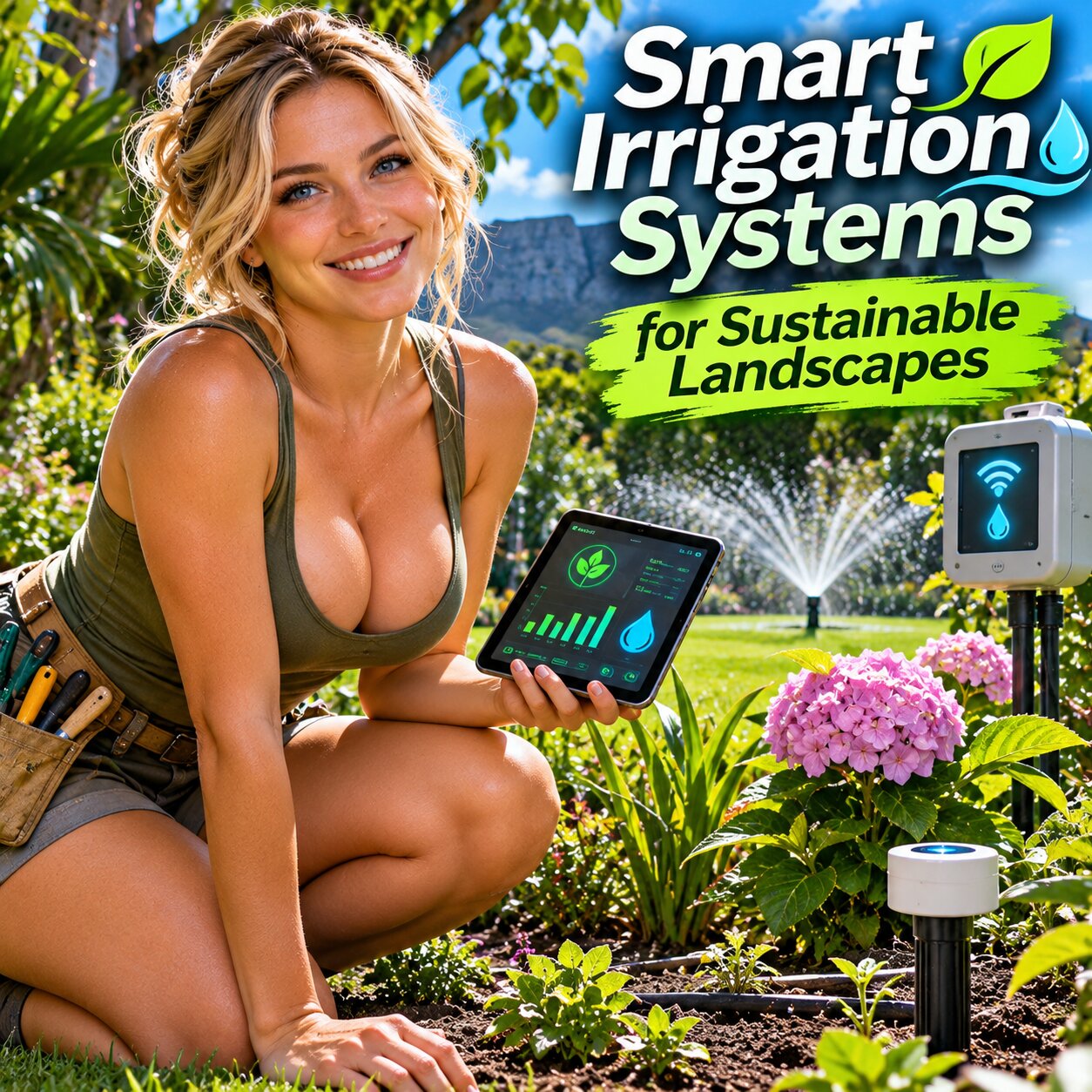
Smart irrigation systems offer a more responsive alternative. By combining sensors, automated controls and environmental data, these technologies help landscape managers deliver water where and when plants need it.
What Are Smart Irrigation Systems?
Smart irrigation systems use automated controllers and environmental information to adjust watering schedules. Unlike conventional timers that activate irrigation at predetermined intervals, smart controllers can respond to factors such as soil moisture, rainfall and estimated plant water requirements.
Some systems rely on local sensors, while others use weather information obtained through connected services. More advanced installations can combine multiple information sources to manage different irrigation zones independently.
The objective is to maintain healthy vegetation while reducing unnecessary water consumption.
How Soil Moisture Sensors Improve Irrigation
Soil moisture sensors measure water conditions within the root zone. This information helps irrigation controllers determine whether additional watering is necessary.
When sufficient moisture remains in the soil, the controller can postpone irrigation. Once moisture falls below a selected threshold, the system can permit watering according to the requirements of the landscape.
Sensor placement is important because moisture conditions can vary across a property. Soil type, shade, plant selection and drainage all influence how quickly different areas dry out.
Weather-Based Irrigation Controllers
Weather-based irrigation controllers adjust watering schedules using environmental conditions. These systems may consider temperature, humidity, solar radiation, wind and rainfall to estimate landscape water requirements.
Many controllers use evapotranspiration calculations. Evapotranspiration describes the combined loss of water through evaporation from surfaces and transpiration from plants.
By estimating these losses, a controller can adjust irrigation to reflect changing weather conditions rather than applying the same amount of water every day.
Connecting Smart Irrigation With Drip Systems
Drip irrigation delivers water directly to targeted areas through emitters positioned near plants. When paired with intelligent controllers, it can provide precise irrigation for gardens, landscaped commercial properties and certain agricultural applications.
Because water is applied close to the root zone, appropriately designed drip systems can reduce losses associated with overspray and wind drift. They can also limit unnecessary watering of pathways and other non-planted surfaces.
However, drip irrigation requires suitable filtration, pressure regulation and periodic maintenance. Blocked emitters or damaged tubing can compromise performance even when the controller operates correctly.
Benefits of Smart Irrigation for Sustainable Landscapes
Well-designed smart irrigation systems can improve water management while supporting long-term landscape health.
- Reduced water waste: Controllers can prevent unnecessary irrigation when soil moisture is adequate.
- Improved plant health: More appropriate watering schedules can reduce the risk of overwatering and underwatering.
- Lower operating costs: Reduced water consumption may decrease utility expenses.
- Better landscape management: Monitoring information can help identify unusual watering patterns.
- Greater operational flexibility: Connected systems may allow remote adjustments and monitoring.
Actual savings depend on the existing irrigation system, climate, installation quality and management practices. Smart technology does not automatically guarantee efficient water use.
Smart Irrigation in Commercial Landscapes
Commercial properties frequently contain multiple landscape zones with different watering requirements. Lawns, ornamental gardens, trees and planted borders may need separate irrigation schedules.
Smart controllers can help facilities managers coordinate these requirements while reducing unnecessary watering. Some systems also provide alerts relating to unusual flow conditions, potentially helping maintenance teams identify leaks or damaged irrigation components.
For larger properties, integration with broader building or landscape management systems may support more coordinated resource monitoring.
Challenges of Installing Smart Irrigation
Although smart irrigation offers practical advantages, successful implementation requires careful planning. Initial installation costs can exceed those of basic timer-based systems, particularly when multiple sensors and specialised controllers are required.
Connectivity can also become a consideration for cloud-dependent equipment. Systems should ideally retain appropriate local control functions when internet access is interrupted.
Maintenance remains essential. Sensors require suitable placement and occasional verification, while valves, pipes, filters and irrigation heads must be inspected for faults.
Combining Smart Irrigation With Sustainable Landscaping
Irrigation efficiency improves when technology supports a landscape designed for local environmental conditions. Drought-tolerant plants, appropriate mulching and healthy soil can reduce watering requirements before automated controls are introduced.
Rainwater harvesting and suitable water reuse systems may provide additional opportunities to reduce reliance on potable municipal supplies, subject to local regulations and water quality requirements.
Landscape designers should also consider hydrozoning, which groups plants with similar watering needs. This allows irrigation systems to deliver more appropriate quantities of water without compromising plant health.
The Future of Intelligent Landscape Water Management
Smart irrigation technology continues to develop through improvements in sensing, connectivity and automated decision-making. Future systems may make greater use of predictive weather information, detailed soil monitoring and integrated landscape performance data.
However, the most sustainable solution is not necessarily the most technologically complex. A properly designed irrigation system with reliable sensors and sensible controls can deliver meaningful benefits without unnecessary features.
By combining intelligent watering technology with responsible landscape design, property owners and facilities managers can support healthier green spaces while making more efficient use of valuable water resources.