Water conservation has become an increasingly important priority for residential developments, commercial properties, industrial facilities, and municipalities. Ageing infrastructure, rising operational costs, and pressure on available water resources make accurate consumption monitoring essential for sustainable management.
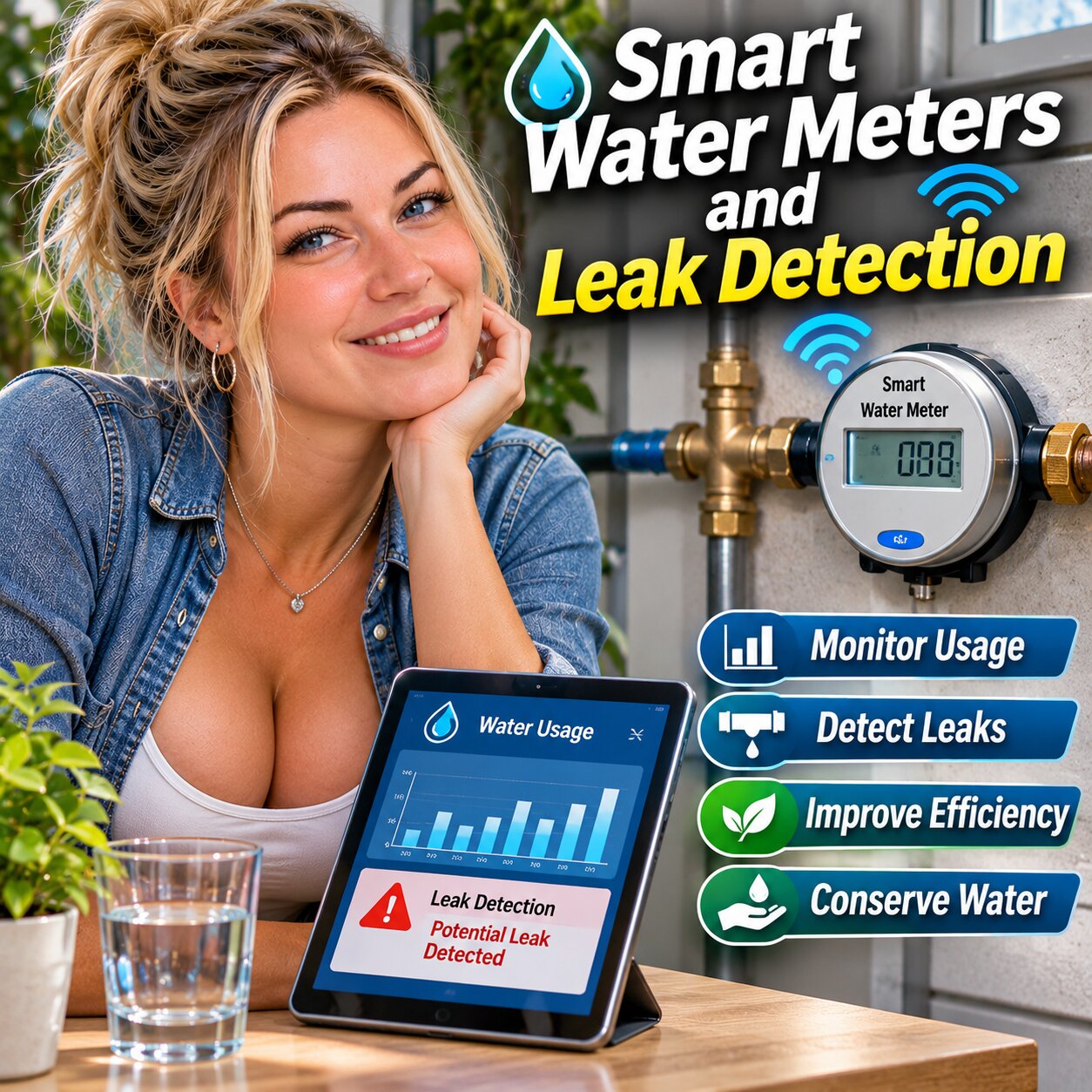
Smart water meters and automated leak detection systems offer practical solutions by providing more detailed information about water consumption. Instead of relying exclusively on periodic manual readings, property owners and facility managers can use connected monitoring technologies to identify unusual usage patterns and investigate potential losses.
What Are Smart Water Meters?
Smart water meters are devices that measure water consumption and transmit readings electronically. Depending on the system, they may use mechanical measuring components with electronic communication modules or fully electronic measurement technologies.
Traditional meters generally require someone to record readings manually. Smart meters can transmit consumption information at scheduled intervals, allowing utility providers and property managers to access more frequent data.
Some installations support remote meter reading, while more advanced systems provide interval-based consumption information through connected management platforms. The frequency and detail of available readings depend on the meter, communication network, and service configuration.
How Smart Water Metering Technology Works
Smart metering systems typically combine water measurement, electronic data collection, and communication technology. The meter records the volume of water passing through the supply line, while an electronic module stores or transmits consumption information.
Communication may occur through cellular networks, radio-frequency systems, or low-power wide-area networks. The most suitable technology depends on infrastructure availability, building layout, transmission distance, and operating costs.
Collected information can be displayed through utility dashboards or integrated into building management platforms. This allows authorised users to compare consumption patterns, monitor trends, and identify unexpected changes.
Some advanced systems also support alarms or notifications when readings indicate unusual usage.
Detecting Water Leaks Through Consumption Patterns
Water leaks are not always immediately visible. Underground pipe failures, concealed plumbing damage, leaking toilet mechanisms, and faulty valves can waste considerable amounts of water before occupants notice a problem.
Smart metering systems can help identify potential leaks by analysing consumption patterns. For example, a property that consistently records water usage throughout the night may have an undetected leak, particularly when normal occupancy patterns suggest minimal demand.
Automated systems can compare consumption against historical baselines and generate alerts when readings exceed configured thresholds. However, unusual usage does not always confirm a leak, as irrigation, cleaning, and legitimate operational activities may produce similar patterns.
Additional investigation is therefore necessary before determining the cause.
Benefits for Commercial and Industrial Facilities
Large facilities often have complicated water distribution networks serving kitchens, bathrooms, cooling equipment, irrigation systems, and industrial processes. Understanding where water is consumed can help managers identify inefficiencies and prioritise improvements.
Submetering individual buildings, departments, or processes provides more detailed information than relying on a single main supply meter. This can reveal unexpected demand in particular areas and support targeted maintenance.
Water consumption data can also inform operational planning and sustainability reporting. Facilities seeking to reduce resource consumption can use verified measurements to establish baselines and evaluate conservation initiatives.
Where supported, automated monitoring may reduce the time between the emergence of a leak and its detection, potentially limiting damage and unnecessary expenditure.
Integrating Smart Water Meters With Building Management Systems
Building management systems provide centralised oversight of various building operations, including heating, ventilation, cooling, lighting, and selected utility services.
Integrating compatible smart water meters into these platforms can give facility managers a broader view of building performance. Water consumption may be analysed alongside occupancy schedules, equipment operation, and other resource demands.
For example, a facility manager could compare increased water usage with cooling system operation to determine whether the change reflects expected demand. Where suitable sensors and controls are installed, some systems can also trigger alerts or initiate protective actions.
Successful integration requires attention to communication protocols, cybersecurity, data quality, and the reliability of connected equipment.
Challenges When Implementing Smart Water Monitoring
Although smart water systems offer important benefits, implementation requires careful planning. Older plumbing infrastructure may need modifications to accommodate new meters, while some installations require additional communication equipment.
Initial equipment costs, installation requirements, connectivity, battery life, and ongoing platform fees should all be considered. Facilities must also establish appropriate procedures for responding to alerts and verifying suspected leaks.
Data security and privacy deserve particular attention because detailed consumption patterns may reveal information about building activity. Access controls, secure communication, and responsible data management should form part of the deployment strategy.
Accurate monitoring also depends on appropriate meter selection, installation, calibration where required, and maintenance.
Building a More Water-Efficient Future
Smart water meters and leak detection technologies can play a valuable role in improving resource efficiency. By making consumption patterns more visible, these systems help property owners, municipalities, and facility managers make better-informed decisions.
However, technology alone cannot eliminate water losses. Effective conservation also requires preventative maintenance, prompt repairs, responsible consumption, and infrastructure investment.
When combined with these practices, smart water monitoring supports more resilient buildings and infrastructure while helping organisations manage one of their most important resources more responsibly.